
The research
What the studies actually found.
A plain-English account of our peer-reviewed breath-hold research — the protocol, the results with their control groups, and what the work does not show. Written so that anyone quoting it can quote it accurately.
The paper
Acute and chronic application of novel incremental breath-hold technique increases endurance exercise performance in healthy men and male military personnel.
Burley, M.J., Wall, B.T., Bond, B., Williams, C.A., Monteyne, A.J. & Stephens, F.B.
Physiological Reports, 2026; 14:e71056. DOI: 10.14814/phy2.71056 →
Open access under CC-BY. Conducted at the University of Exeter and the US Marine Corps Officer Candidate School, Quantico. Ethical approval: University of Exeter Sport and Health Sciences Ethics Committee (refs 2054571, 21-10-20-A-01) and the US Marine Corps Institutional Review Board (IRB 00006871).
What was actually done
The protocol.
One session is fifteen breath-holds, performed lying semi-supine, taking about forty minutes in total — roughly twenty-five minutes of which is breath-holding.
The first hold is thirty seconds. Each subsequent hold is ten seconds longer than the last, finishing at two minutes fifty. Between every hold there is one minute of ordinary, voluntary breathing.
Before each hold, participants took a breath roughly to 80% of maximal inspiratory volume, exhaled completely, then inhaled fully and held.
There is no hyperventilation at any point. This matters: hyperventilation before breath-holding is a recognised risk factor for blackout, and it is not part of this method.
Study A · acute · 11 healthy men
One session, done before exercise.
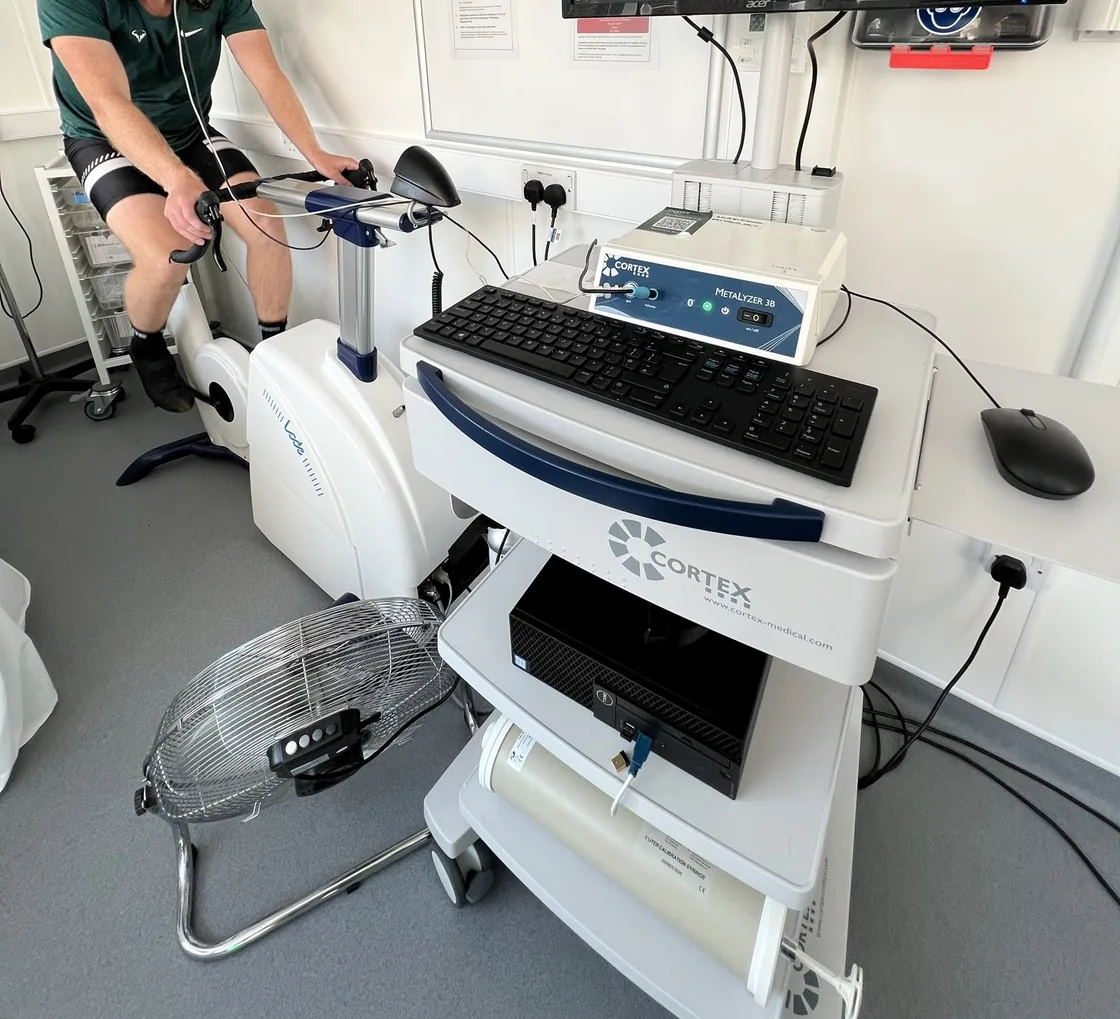
A randomised cross-over design: each participant completed both the forty-minute breath-hold session and forty minutes of quiet rest, then cycled fifteen minutes at 80% of VO₂max followed by a five-minute time trial.
The headline result
8.2% more work in the time trial.
84.4 ± 12.8 kJ after breath-holding versus 78.0 ± 13.4 kJ after rest (p = 0.019). Nine of the eleven participants improved.
This is the cleanest finding in the paper: same people, both conditions, randomised order, against a rested control.
Alongside it
Haemoglobin rose 3%.
Haemoglobin concentration was 3% higher than baseline throughout the breath-hold session (p = 0.030), and unchanged after quiet rest. Once exercise began it rose in both conditions, with no difference between them.
Two smaller observations. Blood lactate during steady-state cycling was 12.2% lower after breath-holding in the three participants in whom it could be measured (7.8 against 8.9 mmol/L), a difference that did not reach statistical significance (p = 0.051). End-tidal oxygen tended to be higher during the session (p = 0.054), was lower during steady-state cycling (116.7 against 118.2 mmHg, p = 0.014) and higher in the time trial (123.3 against 122.4 mmHg, p = 0.042).
Study B · chronic · 48 US Marine Corps officer candidates
Three weeks, inside real military training.
Candidates were randomised to breath-hold training or control and ran the protocol five evenings a week for three weeks. Both groups did the same Officer Candidate School training throughout, on the same diet and routine. Performance was measured by the standard three-mile run.
Three-mile run
The breath-hold group improved about two percentage points more.
Both groups improved, because both were in hard physical training: 7.2% in the breath-hold group against 4.9% in the control group. The difference between groups was statistically significant (p = 0.02).
Read this correctly: the effect attributable to breath-hold training is the gap between the two groups — roughly two percentage points — not the full 7.2%.
Breath-hold and blood
Maximal breath-hold up 129%; haemoglobin up 4.3%.
Maximal breath-hold duration rose substantially further in the breath-hold group than the control (p < 0.001) — though the control group improved as well, and familiarisation accounts for part of that.
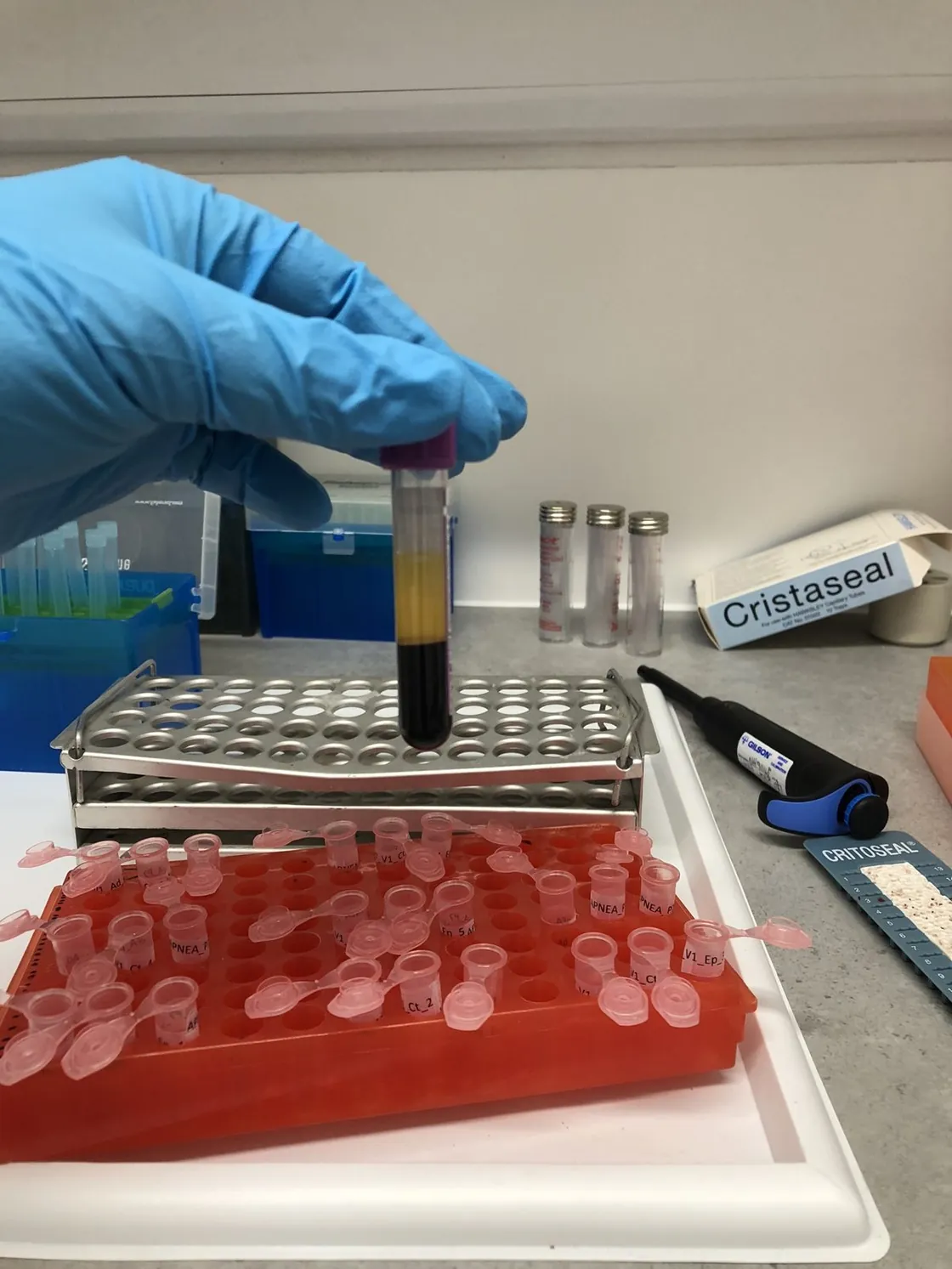
Haemoglobin concentration rose 4.3% in the breath-hold group while falling 6.6% in the control group (group × time interaction p = 0.04; between-group p = 0.037).
Being straight about it
What the research does not show.
These are the authors’ own stated limitations, taken from the paper. We publish them here because a method is only as trustworthy as the honesty of the people teaching it.
The mechanism is inferred, not demonstrated
Spleen volume, splenic contraction and erythropoietin were not measured. As the paper states, any reference to splenic involvement should be considered speculative and based on established literature rather than direct evidence.
Men only
Both studies recruited male participants exclusively. The findings cannot be assumed to transfer to women without further work.
Haemoglobin needs care
Concentration rose in both studies. But haemoglobin mass was not measured, and in Study B some of the change may reflect exercise-induced plasma volume shifts rather than a proportional change in red cells.
Incomplete blood data
Technical faults in Study A left the haematocrit and arterial blood-gas data unusable, so arterial oxygen was estimated using the alveolar gas equation, and lactate was measured in only three of the eleven participants. In Study B, COVID-related constraints meant no baseline blood samples before the induction fitness test.
Attrition, and it was uneven
Seventy-four candidates were recruited to Study B and randomised. Twenty-six were removed from the school for failing to meet its training standards: 8 of 31 in the control group and 18 of 43 in the breath-hold group. Forty-eight completed — 23 control and 25 breath-hold — and their three-mile run times at induction were similar (p = 0.966).
Expectation cannot be ruled out
Participants knew which group they were in. A psychological component — altered perception of effort, or increased confidence — cannot be discounted as a contributor. Run times were recorded by a timing gate, backed up by the school’s own instructors with a stopwatch; maximal breath-holds were timed by stopwatch.
Dose is not yet established
We do not yet know the minimum effective dose, the optimum frequency, or how long the adaptation lasts. The paper calls for larger trials with direct measurement of spleen response and erythropoietin.
If you have seen it quoted
Five things the paper does not say.
Research travels, and it loses precision as it goes. If you have encountered any of these, here is what the study actually reports.
Claim
“Breath-holding makes you run 7.2% faster.”
No. The control group improved 4.9% doing the same training. The difference attributable to breath-hold training is about two percentage points — real, statistically significant, and modest.
Claim
“It more than doubles your breath-hold.”
The training group improved 129%, but the control group improved substantially too. A large part of any first gain in breath-hold duration is familiarisation, not adaptation.
Claim
“It replaces altitude training.”
Haemoglobin concentration did rise in both studies, and the literature treats that response as comparable in potency to altitude strategies. But we measured concentration, not haemoglobin mass, and did not measure EPO. It is a promising parallel, not an established equivalence.
Claim
“It’s the same as other breathing methods.”
It is not. This protocol contains no hyperventilation. It is a progressive ladder of breath-holds with normal breathing in between — structurally different from hyperventilation-then-hold cycles, and the paper argues that the sustained hypoxic–hypercapnic load is what drives the response.
Claim
“It’s proven to work for everyone.”
Two studies, 59 male participants in total, one of them a military training population. That is a promising start and an honest one. It is not a general proof, and we will say so until larger and broader trials exist.
Declared interests
Who paid for it, and what we stand to gain.
The research was funded by the University of Exeter. Matt Burley received a Royal Navy Postgraduate Education Scheme training grant covering postgraduate tuition only. The Royal Navy had no role in study design, analysis, interpretation, or the decision to publish. The US Marine Corps provided access to participants and venue support for Study B and likewise had no role in design, data collection, analysis, interpretation or the decision to publish.
Matt Burley is the sole director of Burley Performance Labs Ltd, which trades as Adapnia, and is the named inventor on UK patent application GB2616190.1 covering a computer-implemented method that adapts breath-hold procedures for application use. The remaining authors declare no competing interests. This is stated in the paper, and we restate it here.
De-identified study data may be available from the corresponding author on reasonable request, subject to a data-sharing agreement and institutional approvals.
Read the work yourself
Both papers are open to anyone.
We would rather you read the research than take our summary of it.
The performance paper
Acute and chronic application of novel incremental breath-hold technique increases endurance exercise performance in healthy men and male military personnel.
Physiological Reports, 2026.
DOI: 10.14814/phy2.71056 →The mechanism paper
The effect of various breath-hold techniques on the cardiorespiratory response to facial immersion in humans.
Experimental Physiology, 2022.
DOI: 10.1113/EP090531 →Independent coverage
Who has picked the work up.
The Physiological Reports study was covered by the Wim Hof Method two days after publication, and is listed in the Trainlytix research library. Neither organisation is connected to Adapnia, and neither piece names it — we link to them because an independent reading of the paper is worth more than our own.
The paper is also indexed on PubMed, PubMed Central and JoVE.